Unraveling the Molecular Mechanisms of Vascular Homeostasis
Blood vessels play essential roles not only in transporting oxygen and nutrients throughout the body but also in maintaining tissue homeostasis. Disruption of vascular homeostasis contributes to the development of various diseases, including refractory vascular diseases, cancer metastasis, inflammation, and thrombosis.
Our laboratory focuses on the TGF-β superfamily, a key regulator of tissue homeostasis, to investigate the molecular mechanisms that maintain vascular homeostasis, particularly in vascular endothelial cells, and how their dysregulation leads to disease. Using cultured cells and genetically engineered mouse models, we study these mechanisms at the molecular, cellular, and organismal levels. Through an integrated approach based on cell biology, we aim to understand the fundamental mechanisms underlying vascular homeostasis and contribute to the development of novel diagnostic and therapeutic strategies for intractable diseases.
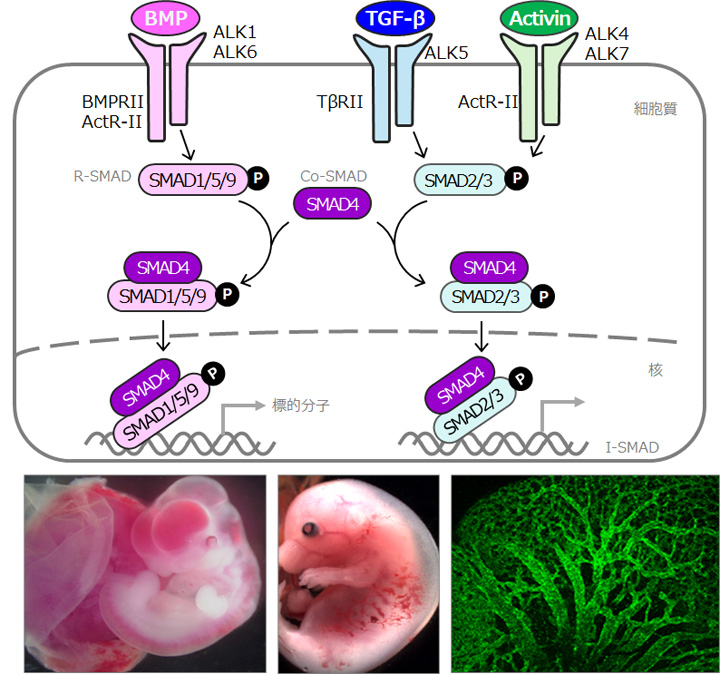
Research Topics
-
Molecular mechanisms regulating vascular and lymphatic endothelial cell functions by TGF-β family signaling
-
Molecular pathogenesis of vascular diseases using genetically engineered mouse models
-
Identification of novel therapeutic targets for intractable diseases
Lab Members
Fumiko Itoh
Professor
- Degree
- Ph.D. (Uppsala University)
- Research Areas
- Cell Biology, Signal Transduction